Quick Answer
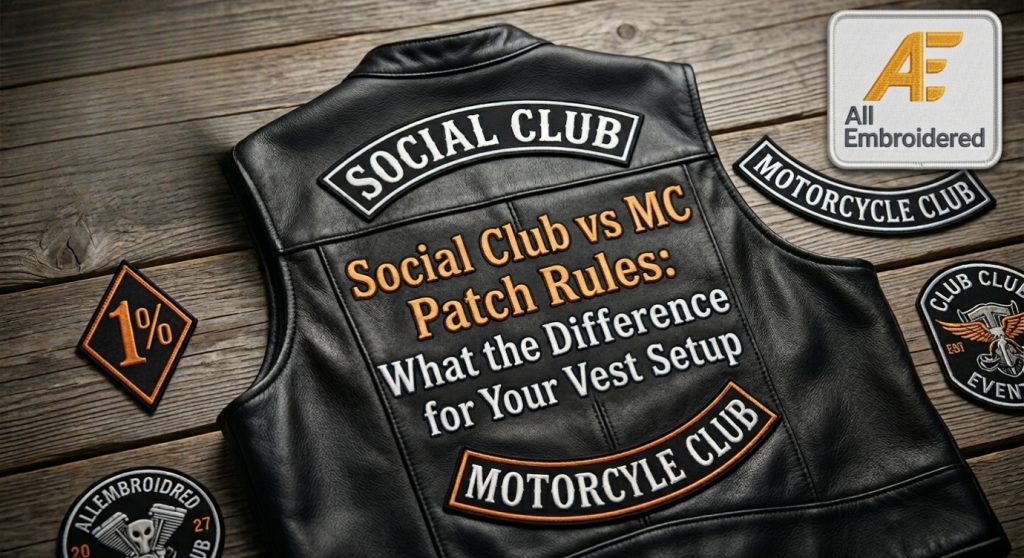
Social clubs and riding clubs follow different patch rules than formal MCs. Social clubs typically use a single patch or two-piece setup without a territory bottom rocker. Christian biker clubs follow similar non-territorial conventions. The key rule for all non-MC riders: never wear a three-piece patch set or 1% designation without earning it through proper MC affiliation.
If you have searched online for patch rules and come away more confused than when you started, you are not alone. The riding community uses terms like MC, riding club, and social club interchangeably in some contexts — but in patch culture, these distinctions carry specific and significant meanings.
Understanding which category applies to your club — or to your position as an independent rider — determines which biker vest patch rules govern your vest setup. This guide covers each club type clearly, from chartered MCs through to solo riders with no affiliation.
For the full context on patch meanings, see our biker patch meanings guide. For placement rules across all vest zones, see the biker vest patch placement rules guide.
MC (Motorcycle Club) — Patch Rules and Why They Are Strict
A chartered Motorcycle Club — MC — operates under the most structured patch system in riding culture. The rules are not arbitrary tradition; they reflect a community where patches function as identity documents, territorial declarations, and earned credentials simultaneously.
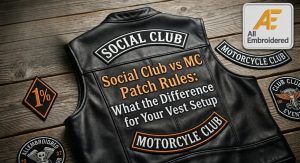
MC members wear a three-piece patch set — top rocker (club name), center patch (club emblem), bottom rocker (territory or chapter). The bottom rocker is the most politically significant piece. It declares that the club claims a geographic area, and in regions where multiple clubs operate, the status of that claim is understood and respected by neighbouring clubs. No club places a bottom rocker casually.
Rank patches — President, Vice President, Sergeant-at-Arms, Road Captain, Treasurer — are worn on the front left chest and reflect elected or appointed roles within the club structure. A member cannot wear a rank patch they do not hold. The 1% patch, where applicable, identifies the club as operating outside mainstream motorcycling association conventions.
These rules are strict because they are functional. Every patch on an MC member’s cut communicates specific, verifiable information to others in the riding community. The strictness preserves the integrity of that communication system.
Riding Club (RC) Patches — The Two-Piece Standard
A Riding Club (RC) occupies a defined and respected position in the motorcycle community that sits distinctly below chartered MC status. The difference is communicated through patches: riding clubs wear a two-piece setup — top rocker and center patch — but no bottom rocker.
The absence of the bottom rocker is not an oversight — it is a deliberate statement that the riding club does not claim territory. This distinction is understood and respected throughout the MC community. A riding club that operated with a bottom rocker would be communicating a territorial claim it has no standing to make, which creates conflict.
The RC Protocol
Many riding clubs operate in areas that are also home to established MCs. The RC protocol — wearing two-piece patches, not claiming territory, and in many cases seeking acknowledgement from dominant area MCs before forming — is how riding clubs maintain respectful co-existence within the broader riding community. This protocol is not about subordination; it is about clarity of identity and mutual respect.
The two-piece RC standard gives riding clubs a clear, legitimate patch identity without encroaching on the three-piece territory that MCs consider exclusively theirs. For riding club members, the two-piece setup is not a lesser version of MC patches — it is the correct and appropriate patch configuration for what the club is.
Social Club Biker Vest Patch Placement
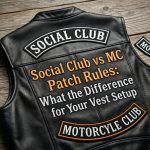
Social club biker vest patch placement follows the most relaxed conventions of any organised riding group. Social clubs — groups that ride together without the structure, hierarchy, or territorial conventions of an MC — typically use a single patch or a simple two-piece design, and their placement on the vest is governed more by aesthetics than by formal protocol.
Without a bottom rocker, the back panel is typically anchored by a single centrepiece patch representing the club’s name or logo. Front patches follow personal preference rather than MC rank conventions. Social club members have more freedom to mix personal novelty patches, cause patches, and achievement patches alongside their club insignia.
The key boundary that social clubs observe — and that all riders in the broader community expect them to observe — is the three-piece rule. No social club, regardless of how long it has been operating or how many members it has, wears a three-piece set with a bottom rocker unless it has become a formally chartered MC through the appropriate process.
Within that boundary, social club vest builds can be as creative and personal as the members choose to make them.
Christian Biker Patches Vest — Christian Motorcycle Clubs
Christian motorcycle clubs represent one of the most significant and widespread sub-communities in organised riding. Organisations like the CMA (Christian Motorcyclists Association) have large memberships and a well-established patch culture that operates alongside — but distinctly from — secular MC conventions.
Christian biker patches vest conventions typically follow social club or riding club frameworks rather than full MC three-piece format. Most Christian motorcycle clubs use a two-piece or single-patch system, reflecting their non-territorial and community-oriented mission. The patches themselves frequently incorporate crosses, biblical references, and faith-based imagery that immediately identify the wearer’s affiliation and values.
- ▸CMA patches — The Christian Motorcyclists Association uses a distinctive logo patch that is widely recognised in the riding community. CMA members often combine the club patch with personal faith-based patches and cause patches.
- ▸Front panel emphasis — Christian club vests often place faith-oriented patches more prominently on the front panel than secular riding vests would. Scripture reference patches, cross designs, and outreach message patches appear in positions that MC culture would reserve for rank insignia.
- ▸No territorial claims — Christian motorcycle clubs universally follow the no-bottom-rocker convention. Their mission is explicitly non-territorial and community-bridge-building — this is reflected in their patch setup.
Christian riders who are members of a Christian MC club wear their club’s designated patches. Independent Christian riders who are not club members have the same freedom as any independent rider to wear faith-based patches alongside personal and novelty patches without restriction.
Biker Gang Vest Patches — Context and Caution
The term “biker gang” is a media construct that the riding community generally rejects as inaccurate. However, outlaw MC patches — the full colours of 1% clubs — represent a specific and serious category of patch culture that deserves straightforward treatment.
Wearing the specific colours — patch design, colour combination, and rocker configuration — of a known outlaw MC without belonging to that club is not simply disrespectful. In regions where those clubs operate, it creates genuine risk. Outlaw MCs take the protection of their colours seriously, and the consequences of wearing them without entitlement are not limited to social friction.
The Practical Rule
Never wear patches that could be mistaken for the specific colours of a known club — whether outlaw MC, mainstream MC, or any other organised club — unless you are a member. If you are unsure whether your patch design resembles a known club’s colours, research it before sewing. The risk is not theoretical.
What Rules Apply to Independent Riders?
Solo riders with no club affiliation have the broadest creative freedom of any rider category — and the fewest restrictions. The rules that govern MC patches simply do not apply to an independent rider who is not claiming MC membership.
What an independent rider can wear without restriction: novelty patches, personal artwork patches, veteran and military patches, cause and charity patches, achievement patches, brand patches, event patches, and any custom design that represents their personal identity.
What an independent rider should avoid: any patch that could be mistaken for earned MC insignia — three-piece configurations, 1% patches, specific club colours, or rank patches. Outside that boundary, build the vest however you choose.
Frequently Asked Questions
What is the difference between an MC and a riding club?
A Motorcycle Club (MC) is a formally chartered club that follows the three-piece patch tradition — top rocker, center patch, bottom rocker — and typically operates under established MC protocol, including territory conventions. A Riding Club (RC) is an organised group that rides together but does not claim territory, wears two-piece patches (no bottom rocker), and typically operates within the acknowledgement of dominant area MCs. The distinction is recognised and respected throughout the riding community.
Can I start my own social club with patches?
Yes — forming a social riding club and commissioning patches for it is entirely legitimate. The key is structuring your patch setup correctly: use a single patch or two-piece design (no bottom rocker territory claim), create an original design that does not resemble any existing club’s colours, and in areas where established MCs operate, research the local protocol for new clubs entering the riding community. Most experienced riders will advise making informal contact with area clubs before wearing new patches publicly.
What patches can a Christian biker wear freely?
A Christian rider who is a member of a Christian motorcycle club wears their club’s designated patches. An independent Christian rider can freely wear cross patches, scripture reference patches, CMA support patches, faith-based cause patches, and any personal design that reflects their beliefs. The restrictions that apply to secular patches apply equally to Christian riders — no three-piece sets, no 1% patches, no specific club colours — but faith-based personal patches have no ownership or earning requirements.
Is it disrespectful to wear MC-style patches without club membership?
Yes — wearing three-piece patches, 1% patches, or specific club colours without legitimate membership is considered a serious breach of respect across all levels of the riding community, not just among MCs. The patches represent earned identity, and wearing them without earning them misrepresents who you are to every rider who understands the language. In many regions it also carries practical risks beyond social consequences. This rule applies universally regardless of whether you are in a club, a riding club, or riding independently.
Source the Right Patches for Your Club Type
Whether you are setting up a social club, building an independent rider vest, or sourcing patches for a Christian riding group — we supply embroidered, woven, and custom patches with no minimum order.
Also read: Biker Patch Meanings Guide | Vest Patch Placement Rules | Complete Guide